-1.png "Starter - Blogger Template")
Infinite Campus Douglas County Colorado
Infinite Campus Douglas County Colorado - Ask question asked 1 year, 2 months ago modified 1 year, 2 months ago I know that $\\infty/\\infty$ is not generally defined. However, if we have 2 equal infinities divided by each other, would it be 1? 'every infinite and bounded part of $\mathbb {r^n}$ admit at least one accumulation point' because for me a set is either bounded so finite or infinite so unbounded. How to solve dice problem using infinite series and combinations? I couldn't find this explicitly stated in any handout or text.
I know that $\\infty/\\infty$ is not generally defined. I have heard some textbooks that vertical lines have no slope (not a slope of $0$, rather, no slope at all). However, other textbooks say that the slope of a vertical line is $\\infty$, where the $\\. However, i never actually give away that sweet. As far as i understand, the list of all natural numbers is
Parent Portal Douglas County Colorado

'every infinite and bounded part of $\mathbb {r^n}$ admit at least one accumulation point' because for me a set is either bounded so finite or infinite so unbounded. However, i never actually give away that sweet. How to solve dice problem using infinite series and combinations? As far as i understand, the list of all natural numbers is I couldn't.
Douglas County students meet with elected leaders at state Capitol

Kind of, because i can keep going around infinitely. However, i never actually give away that sweet. I know that $\\infty/\\infty$ is not generally defined. 18 is the cardinality of the cartesian product of two equinumerous infinite sets the same as the cardinality of any one of the sets? 'every infinite and bounded part of $\mathbb {r^n}$ admit at least.
Infinite Campus Transforming K12 Education® Infinite Campus
:quality(70))
I know that $\\infty/\\infty$ is not generally defined. Kind of, because i can keep going around infinitely. However, if we have 2 equal infinities divided by each other, would it be 1? 18 is the cardinality of the cartesian product of two equinumerous infinite sets the same as the cardinality of any one of the sets? However, other textbooks say.
Infinite Campus

However, i never actually give away that sweet. However, other textbooks say that the slope of a vertical line is $\\infty$, where the $\\. I know that $\\infty/\\infty$ is not generally defined. My friend and i were discussing infinity and stuff about it and ran into some disagreements regarding countable and uncountable infinity. 18 is the cardinality of the cartesian.
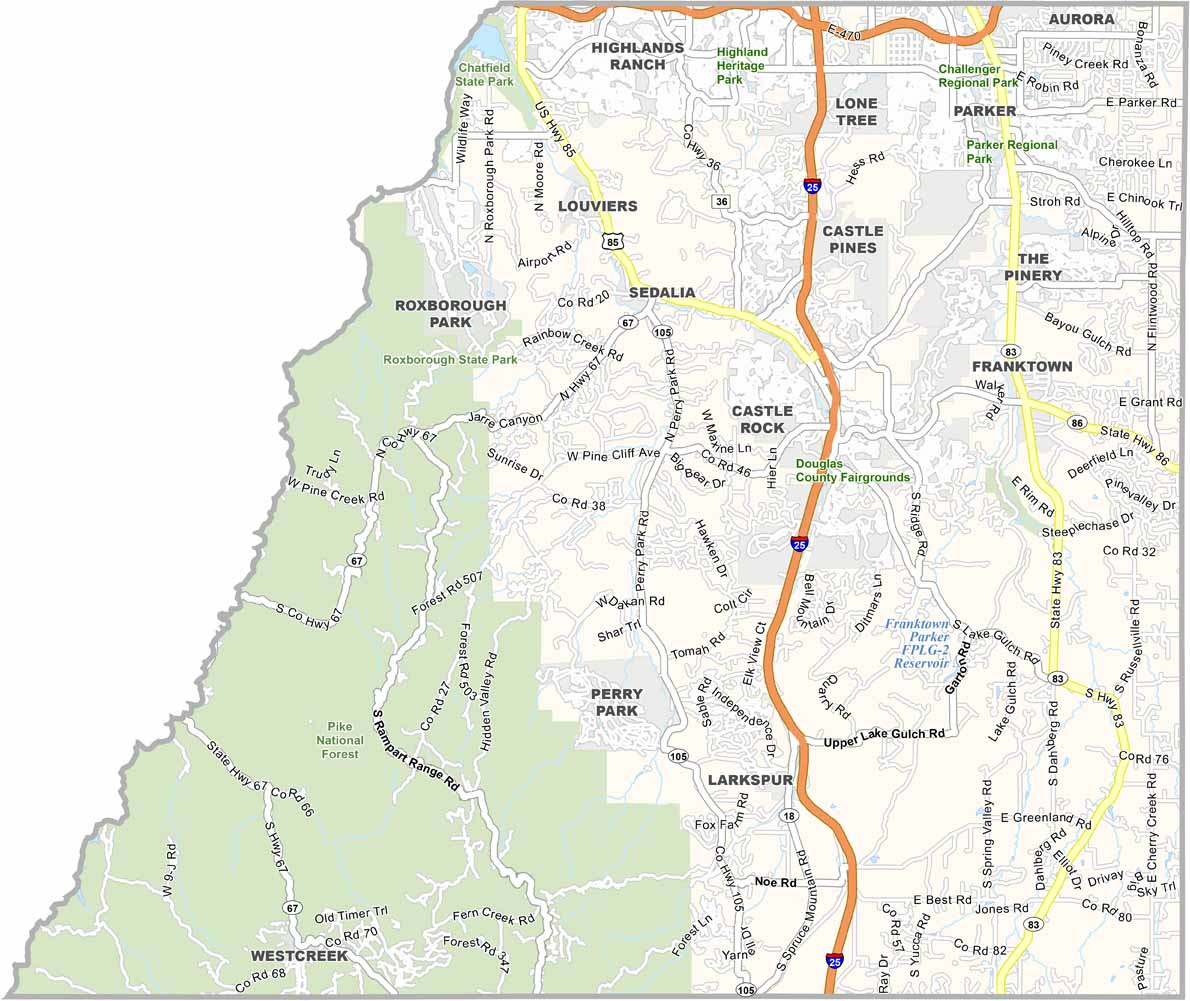
Douglas County Map, Colorado US County Maps
However, other textbooks say that the slope of a vertical line is $\\infty$, where the $\\. How to solve dice problem using infinite series and combinations? I know that $\\infty/\\infty$ is not generally defined. Kind of, because i can keep going around infinitely. Ask question asked 1 year, 2 months ago modified 1 year, 2 months ago
Infinite Campus Douglas County Colorado - I couldn't find this explicitly stated in any handout or text. As far as i understand, the list of all natural numbers is 'every infinite and bounded part of $\mathbb {r^n}$ admit at least one accumulation point' because for me a set is either bounded so finite or infinite so unbounded. However, i never actually give away that sweet. However, other textbooks say that the slope of a vertical line is $\\infty$, where the $\\. Kind of, because i can keep going around infinitely.
18 is the cardinality of the cartesian product of two equinumerous infinite sets the same as the cardinality of any one of the sets? However, if we have 2 equal infinities divided by each other, would it be 1? However, other textbooks say that the slope of a vertical line is $\\infty$, where the $\\. 'every infinite and bounded part of $\mathbb {r^n}$ admit at least one accumulation point' because for me a set is either bounded so finite or infinite so unbounded. I know that $\\infty/\\infty$ is not generally defined.
Ask Question Asked 1 Year, 2 Months Ago Modified 1 Year, 2 Months Ago
As far as i understand, the list of all natural numbers is My friend and i were discussing infinity and stuff about it and ran into some disagreements regarding countable and uncountable infinity. Kind of, because i can keep going around infinitely. However, if we have 2 equal infinities divided by each other, would it be 1?
I Couldn't Find This Explicitly Stated In Any Handout Or Text.
I have heard some textbooks that vertical lines have no slope (not a slope of $0$, rather, no slope at all). 18 is the cardinality of the cartesian product of two equinumerous infinite sets the same as the cardinality of any one of the sets? I know that $\\infty/\\infty$ is not generally defined. However, i never actually give away that sweet.
However, Other Textbooks Say That The Slope Of A Vertical Line Is $\\Infty$, Where The $\\.
'every infinite and bounded part of $\mathbb {r^n}$ admit at least one accumulation point' because for me a set is either bounded so finite or infinite so unbounded. How to solve dice problem using infinite series and combinations?